
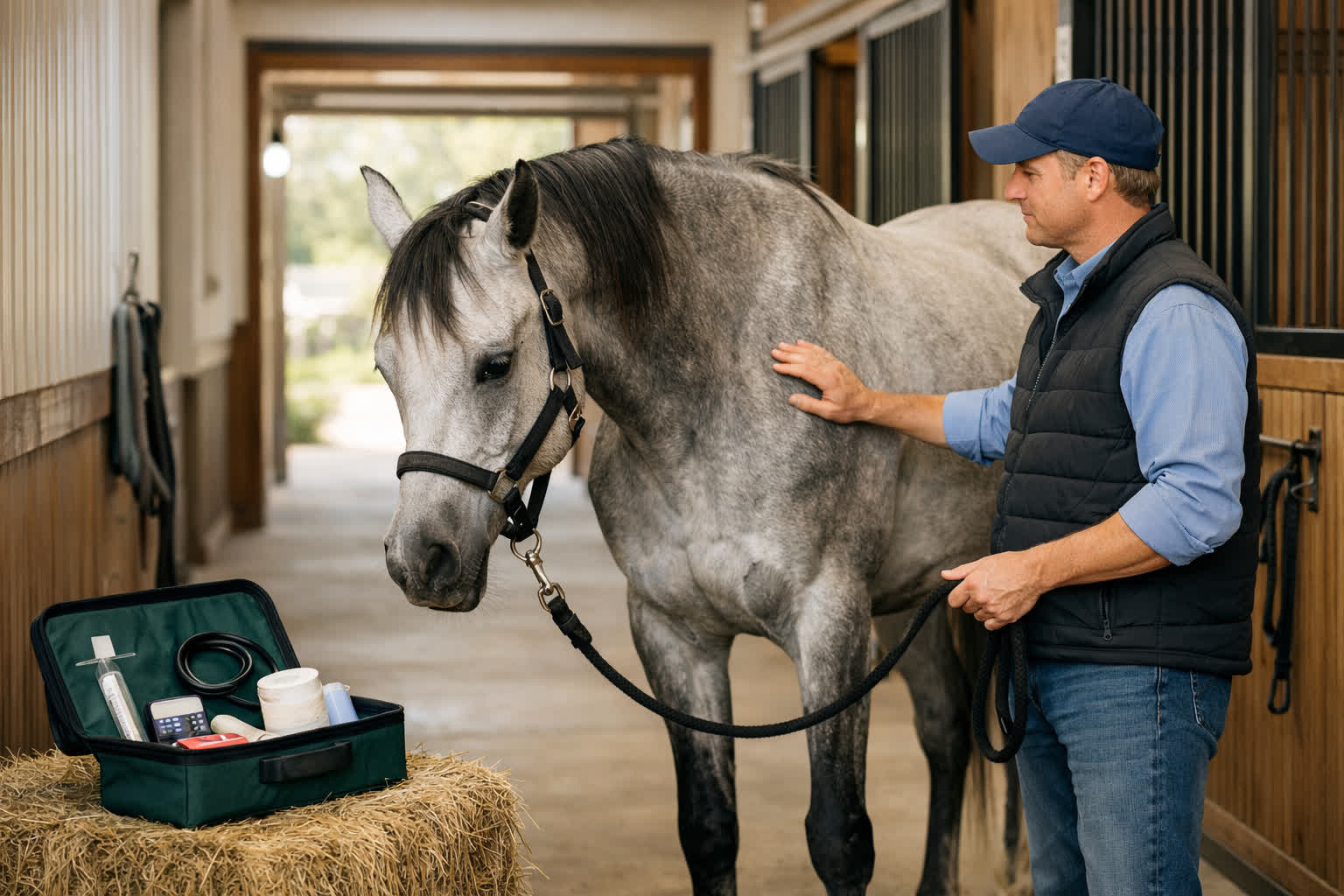
Owners often search for horse colic prevention after a scare, but prevention works best before the first emergency.
No management plan can eliminate colic completely. Horses can still develop abdominal pain even in well-run barns. But daily routines can reduce risk significantly.
1. Keep water available at all times
Hydration is one of the most practical prevention tools in the stable.
Pay extra attention when:
- weather turns cold
- buckets freeze
- horses travel
- workload increases
- horses sweat more than usual
Some colic cases are linked to poor water intake and dry gut contents, especially impactions.
2. Build the diet around forage
Horses are designed to process forage steadily through the day.
That means:
- good-quality hay or pasture should do most of the work
- large grain meals should be limited
- concentrate-heavy feeding should be handled carefully
Sudden diet changes are a classic management risk. Make feed changes gradually whenever possible.
3. Split concentrates into smaller meals
If the horse needs concentrate feed, smaller divided meals are generally safer than one heavy feeding.
Large meals can overload normal digestive flow and increase gut stress.
4. Reduce stress during change
Stress matters more than many owners think.
Watch horses closely during:
- transport
- shows
- stable moves
- turnout changes
- workload shifts
- social group changes
Some horses go off water or alter gut motility when routine changes quickly.
5. Manage parasites and sand risk
Work with your vet on a proper parasite-control plan rather than guessing.
Also watch for sand exposure:
- avoid feeding directly on sandy ground
- use feeders or mats where needed
- ask your vet whether sand management makes sense in your area
6. Turnout and movement help
Horses generally do better with regular movement than with long periods of confinement and abrupt bursts of work.
Consistent turnout and gradual exercise changes support digestive function better than unstable routines.
7. Review the horse, not just the barn
Some horses carry more risk than others.
Pay closer attention to horses that:
- have had colic before
- crib or windsuck
- drink poorly
- are older
- are in intense training
- are recovering from illness or stress
Prevention is not only about farm rules. It is also about knowing which horses need tighter monitoring.
8. Build a colic-prevention routine
The barns that catch problems early usually do simple things well:
- fixed feeding times
- clean water checks
- manure checks
- turnout consistency
- careful observation during weather or routine changes
That kind of consistency matters more than complicated theory.
How YaWaho supports prevention
YaWaho cannot remove every risk, but it can make risk management more disciplined.
With YaWaho, farms can combine:
- 24/7 stable monitoring
- health notes
- treatment history
- shared communication across owners, staff, and vets
That helps teams spot behavior changes earlier and connect them to feeding, hydration, stress, or treatment history.
Bottom line
Colic prevention is mostly about stable basics done well:
- water
- forage
- gradual change
- routine
- movement
- parasite control
- lower stress
Most barns do not need a more complicated system than that. They need a more consistent one.